
Beginnings
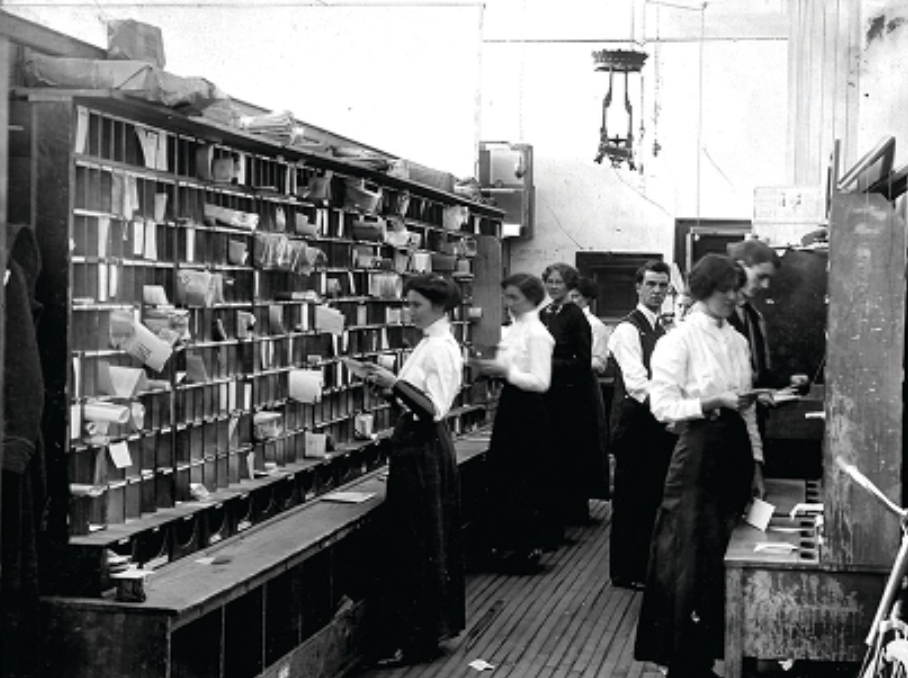
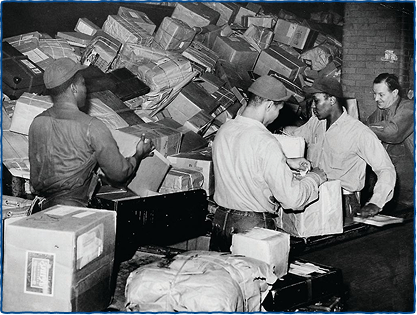
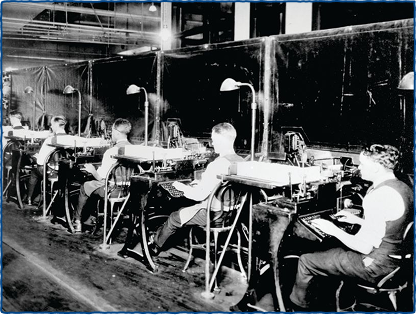
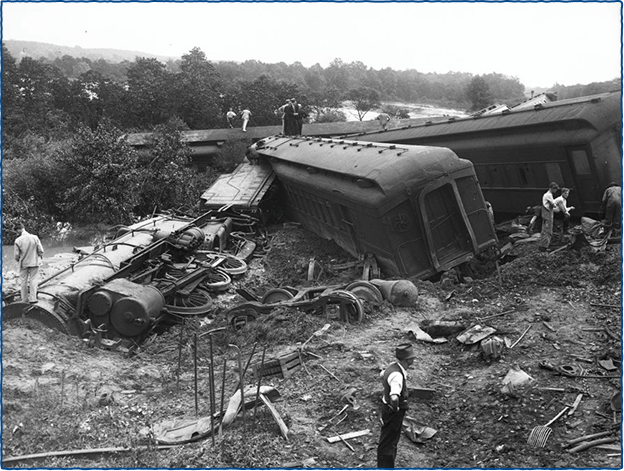
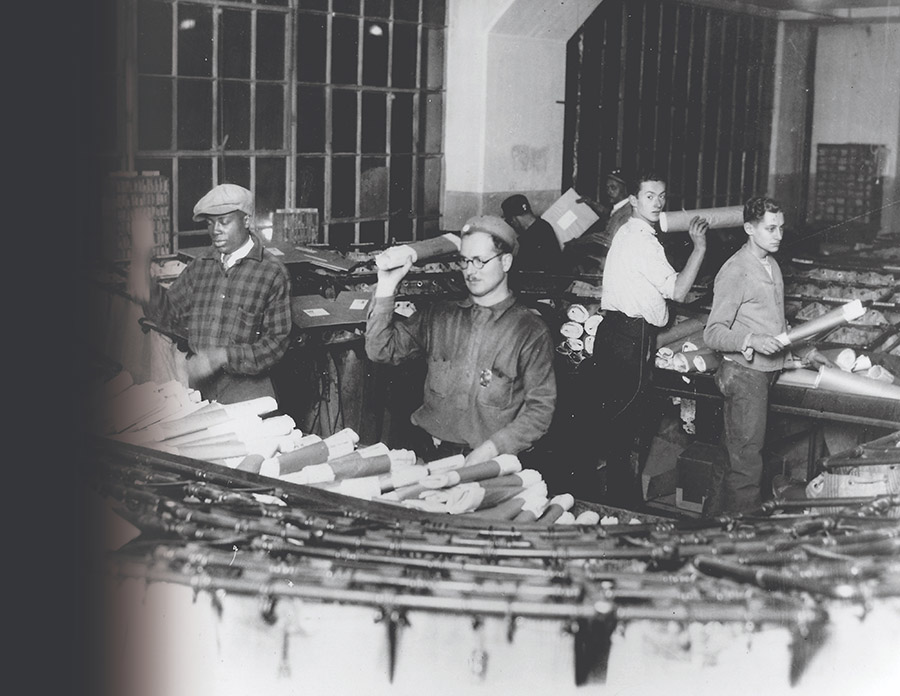
Working conditions on railway mail trains could be deadly. By 1920, 11,000 railway clerks had been injured and over 300 were killed in wrecks.
Library of Congress
Early Postal Work
The introduction of railways expanded the reach of the Post Office, reduced postage rates, and created large increases in mail volumes, more than doubling from 1844 – 1851.
The system of patronage, whereby postmasters and other postal workers were political appointees, caused chaos in the mail system due to massive turnover when administrations changed.
With the growth of the Post Office, an apolitical system was necessary for stability. The Civil Service Commission for postal hiring was created with the Pendleton Act of 1883.
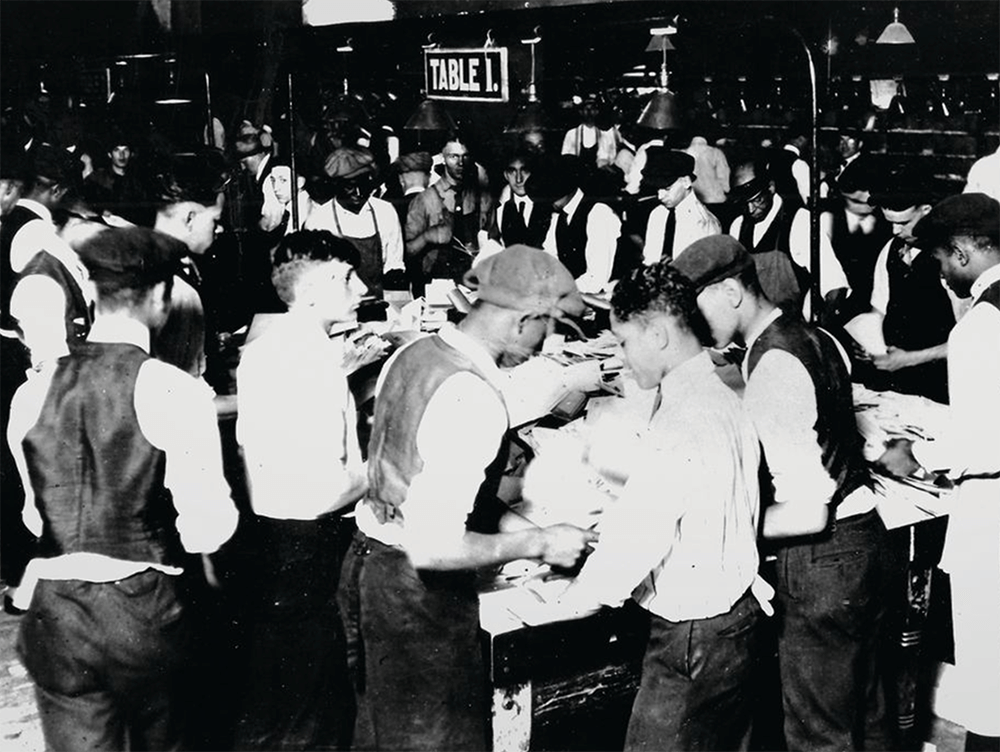
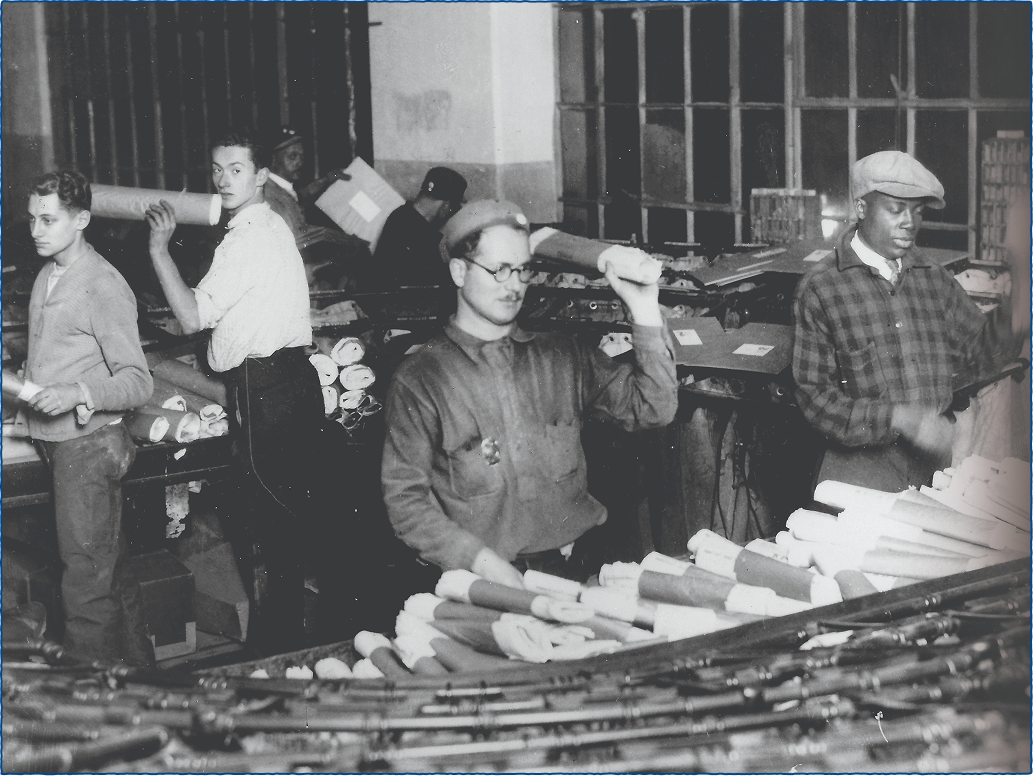
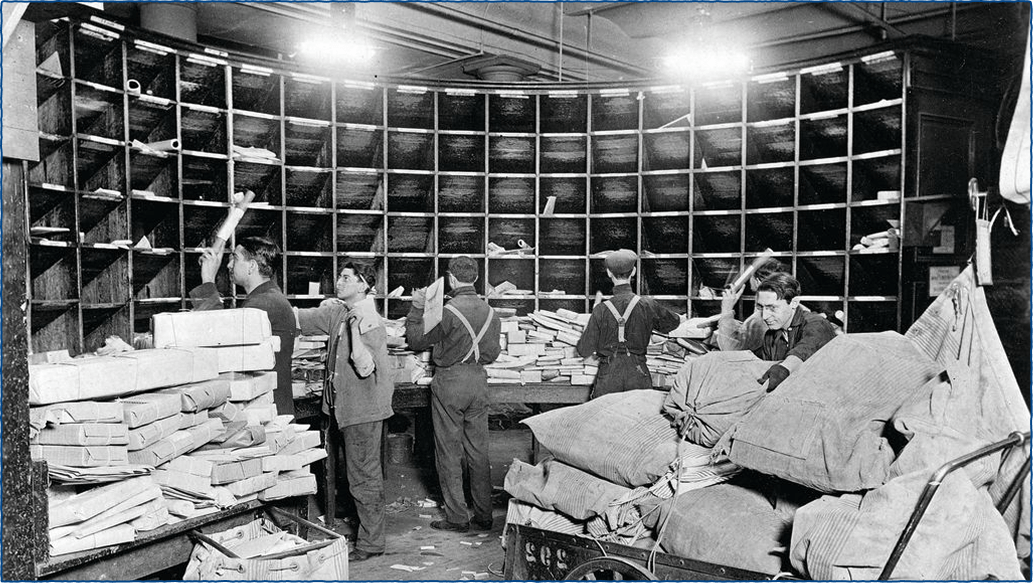
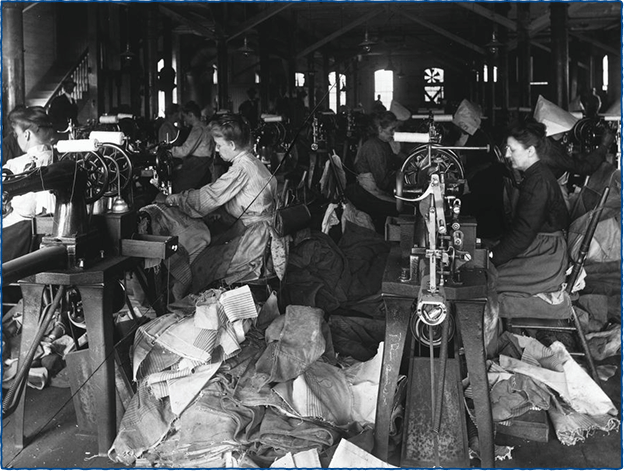
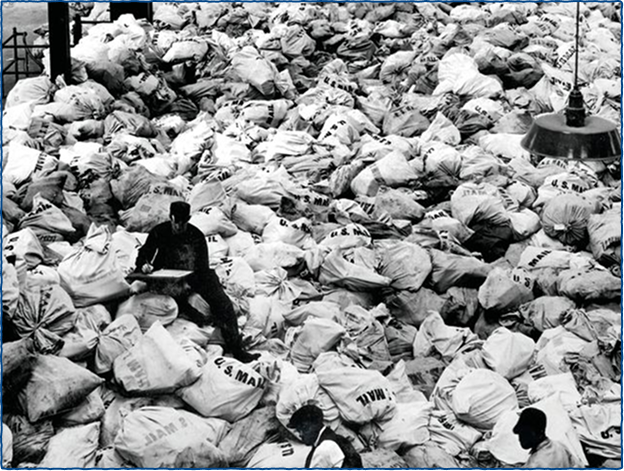
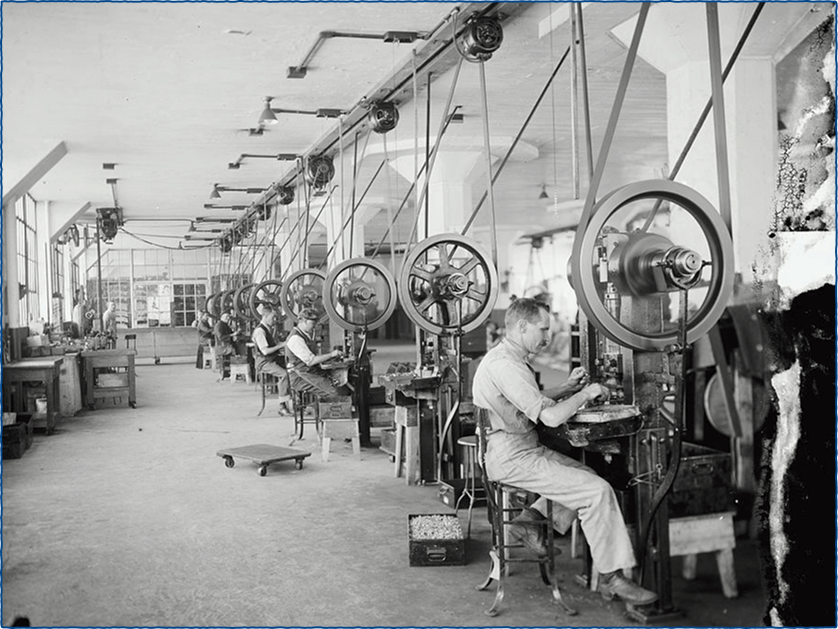
Carrie L. Hurley, who retired from the Post Office Department in 1923 after 26 years on the job, stitched countless mailbags during her years at the Mail Equipment Shop in Washington, D.C.
The Early Workforce
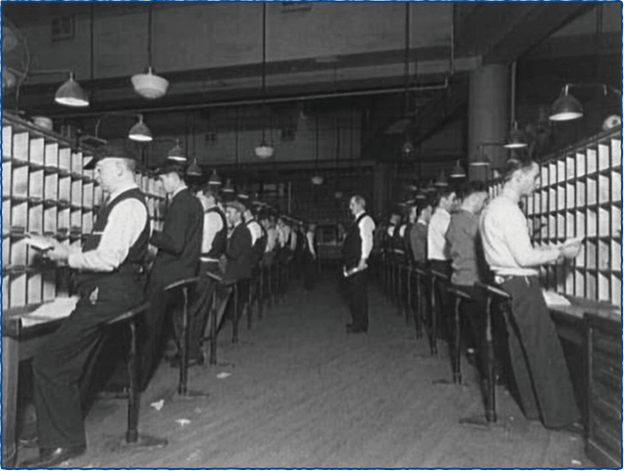
White men dominated the early postal workforce and led the unions. The Pendleton Act did not address fair employment practices or gender equity.
Women who took civil service exams were placed on a separate register and were hired after the “male register” was exhausted.
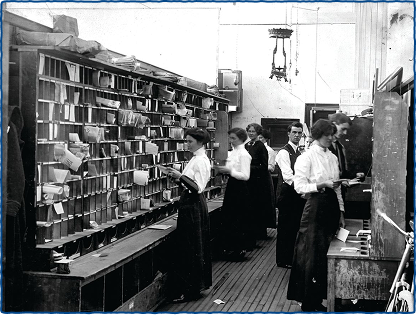
Only certain jobs were considered “fit” for women – such as working as dead letter clerks or as seamstresses repairing mail bags.
Due to the shortage of male workers during World War I, more women entered the Post Office.
However, when the veterans returned, the women were leg go. This cycle repeated itself during World War II.
Early Union Organizing
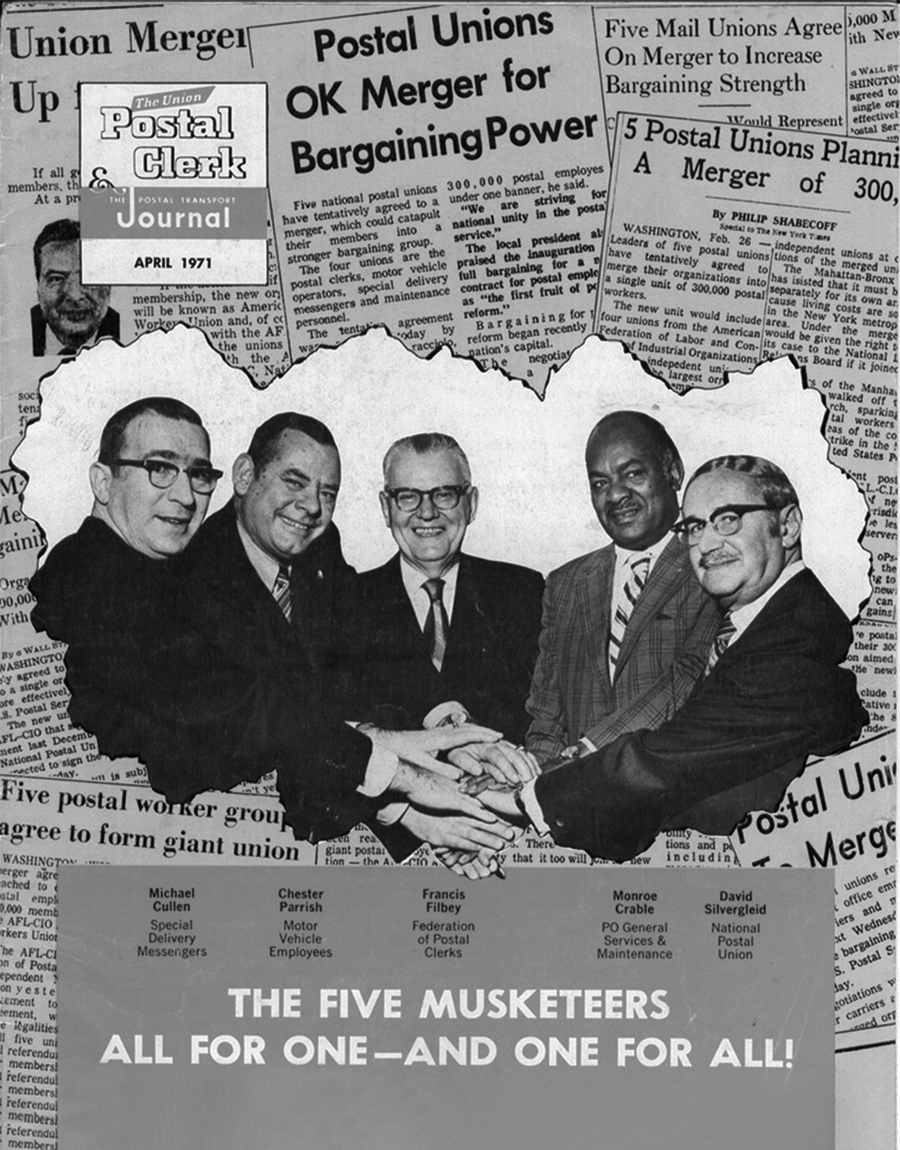
Early organizing was based on crafts and at times unions were segregated – which divided and weakened workers.
The Railway Mail Mutual Benefit Association, was formed in 1874 to provide white postal clerks Within low-cost life insurance and to advocate for better working conditions. It eventually became the Railway Mail Clerks Association.
In 1906 various clerk locals formed the National Federation of Post Office Clerks, affiliated with the American Federation of Labor. To thwart unionization, the Post Office Department prohibited workers from joining the AFL and prosecuted postal workers who resigned their positions in protest of poor working conditions.
In an effort to forestall worker revolts, the Post Office Department increased clerks’ pay by 8-percent in 1912. This was a paltry sum after decades of frozen wages.
African American workers faced discrimination in hiring, job opportunities, and advancement.
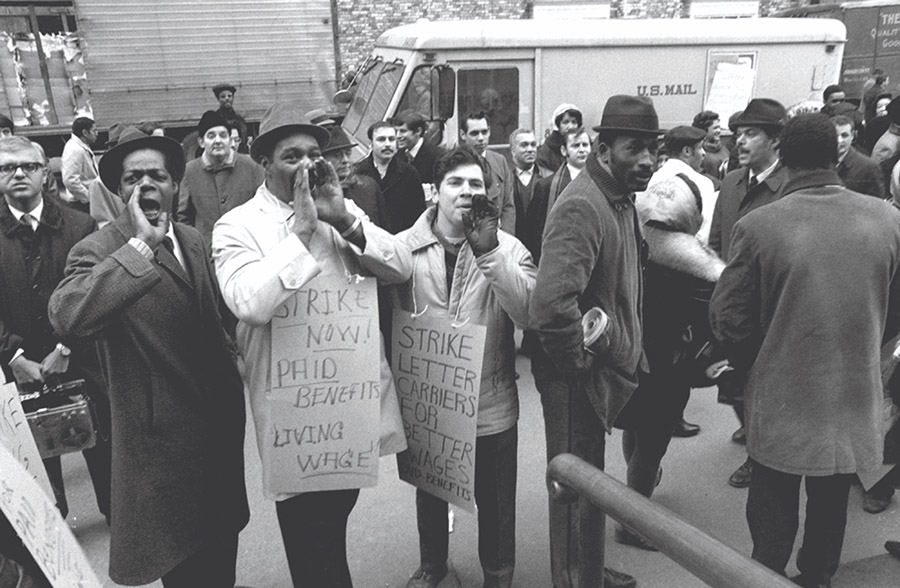
Where Black workers were hired, they were relegated to work that was the least skilled and most difficult. Postal employment did not begin to open up on an equal basis until the 1960s.
The Wilson Era
Postal workers faced new attacks and challenges when Woodrow Wilson became President in 1913. Wilson’s Postmaster General, Albert Burleson, imposed unreasonable work standards, aimed at speeding up work and cutting costs.
Wilson and Burleson were staunch segregationists. Burleson applied Jim Crow laws to the Post Office. Railway mail clerks were segregated on the grounds that white workers should not have to share towels, eating spaces and restrooms with Black workers – even though they had been doing so for over 50 years.
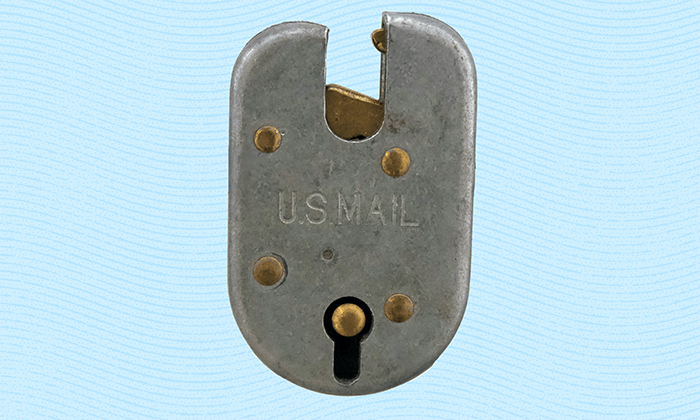
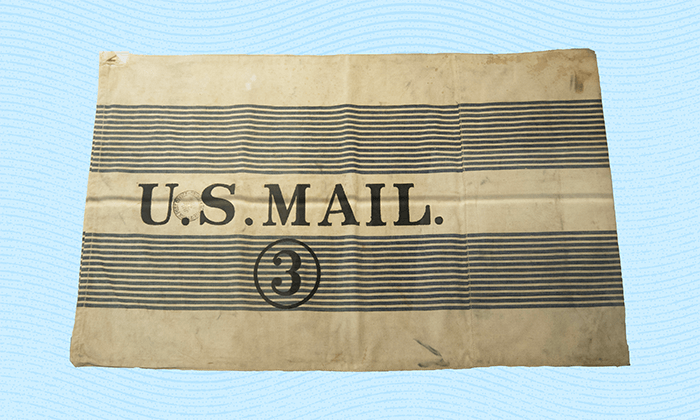
Mailbag
Over the years postal employees have made millions of mailbags. If you look closely at the circular hand stamp on this bag, you’ll discover when this mailbag was made. Although it looks brand new, it’s over 100 years old.
United States Postal Service
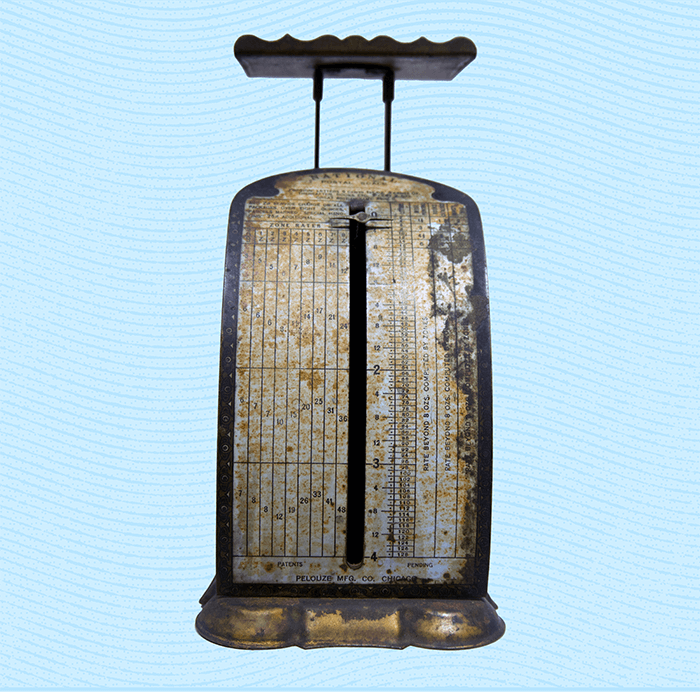
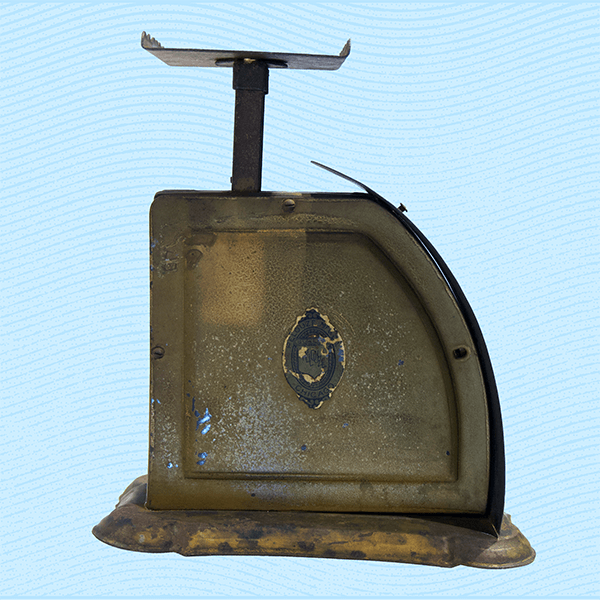
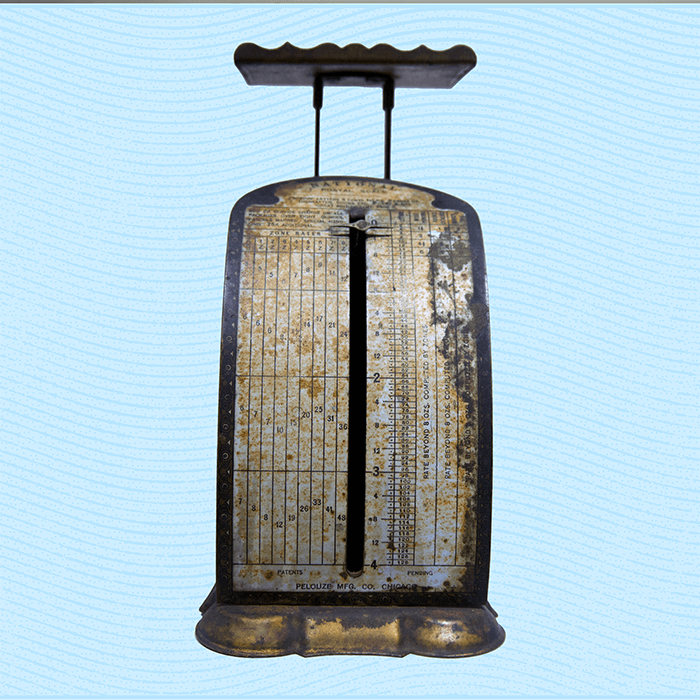
Postal Scale
The weight of letter mail has always been an important part in calculating postage. Every post office received a scale. This letter scale is from the last century.
United States Postal Service